Laser Tattoo Removal
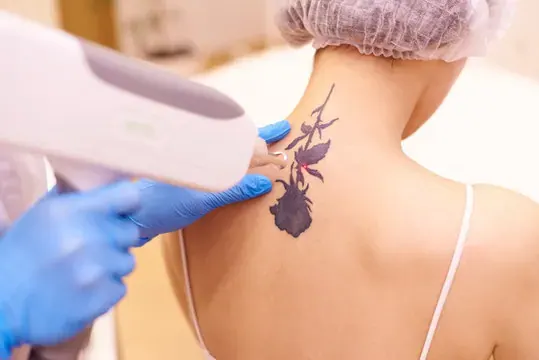
Laser tattoo removal is the gold-standard treatment for safely fading or completely erasing unwanted tattoos without damaging the surrounding skin. Q-switched lasers deliver extremely short, high-energy pulses that pass harmlessly through the upper skin and shatter the underlying tattoo ink into microscopic fragments. These fragments are then cleared away gradually by the body's own immune system over the weeks following each session. Because different ink colours absorb different laser wavelengths, modern tattoo removal uses multiple wavelengths to target the full spectrum of pigments — from dense black and dark blue through to red, green, yellow, and white.
Overview
Laser tattoo removal is the gold-standard treatment for safely fading or completely erasing unwanted tattoos without damaging the surrounding skin. Q-switched lasers deliver extremely short, high-energy pulses that pass harmlessly through the upper skin and shatter the underlying tattoo ink into microscopic fragments. These fragments are then cleared away gradually by the body's own immune system over the weeks following each session. Because different ink colours absorb different laser wavelengths, modern tattoo removal uses multiple wavelengths to target the full spectrum of pigments — from dense black and dark blue through to red, green, yellow, and white.
The number of sessions required depends on the tattoo itself: the age, size, depth, ink density, colour palette, body location, and skin type all influence how quickly the tattoo will fade. Older amateur tattoos and professional black-ink tattoos generally respond faster, while multi-coloured, dense, or layered tattoos take longer. Most tattoos require six to twelve sessions spaced six to eight weeks apart to allow the immune system to clear the fragmented ink between treatments. Cosmetic tattoos (eyebrow microblading, lip blush, eyeliner) and traumatic tattoos (such as road-rash pigment after an accident) can also be treated.
At Dr Amit Aesthetics in Aligarh, tattoo removal is performed by Dr. Amit Agrawal — a plastic surgeon and laser specialist with 30+ years of experience — using Q-switched Nd:YAG laser technology. Each session is preceded by a skin assessment, a test patch where appropriate, and a clear estimate of the number of sessions, cost, and likely outcome so patients know exactly what to expect before they commit.
What it addresses
- Q-switched Nd:YAG laser tattoo removal (1064 nm for black, blue, and dark inks)
- Q-switched 532 nm laser for red, orange, and yellow inks
- Multi-pass laser removal for professional and amateur tattoos
- Cosmetic tattoo removal (microblading, lip blush, permanent eyeliner)
- Traumatic tattoo removal (post-accident embedded debris and pigment)
- Topical anaesthetic cream and skin-cooling for patient comfort
- Combined laser and surgical excision for very small or stubborn tattoos
Recovery & aftercare
Each laser session takes between 5 and 30 minutes depending on tattoo size, with a topical numbing cream applied 30 to 45 minutes beforehand to keep the procedure comfortable. Immediately after treatment, the area appears whitish for a few minutes (a normal laser response), followed by mild redness, swelling, and tenderness similar to a light sunburn — these settle within two to three days. Pinpoint scabbing or blistering may form over the first week and must not be picked. An antibiotic ointment and a simple dressing are applied, and patients can return to work the same or next day. Strict sun protection of the treated area is mandatory between sessions, and treatments are spaced six to eight weeks apart to allow the immune system to clear the fragmented ink and the skin to recover fully before the next pass.